
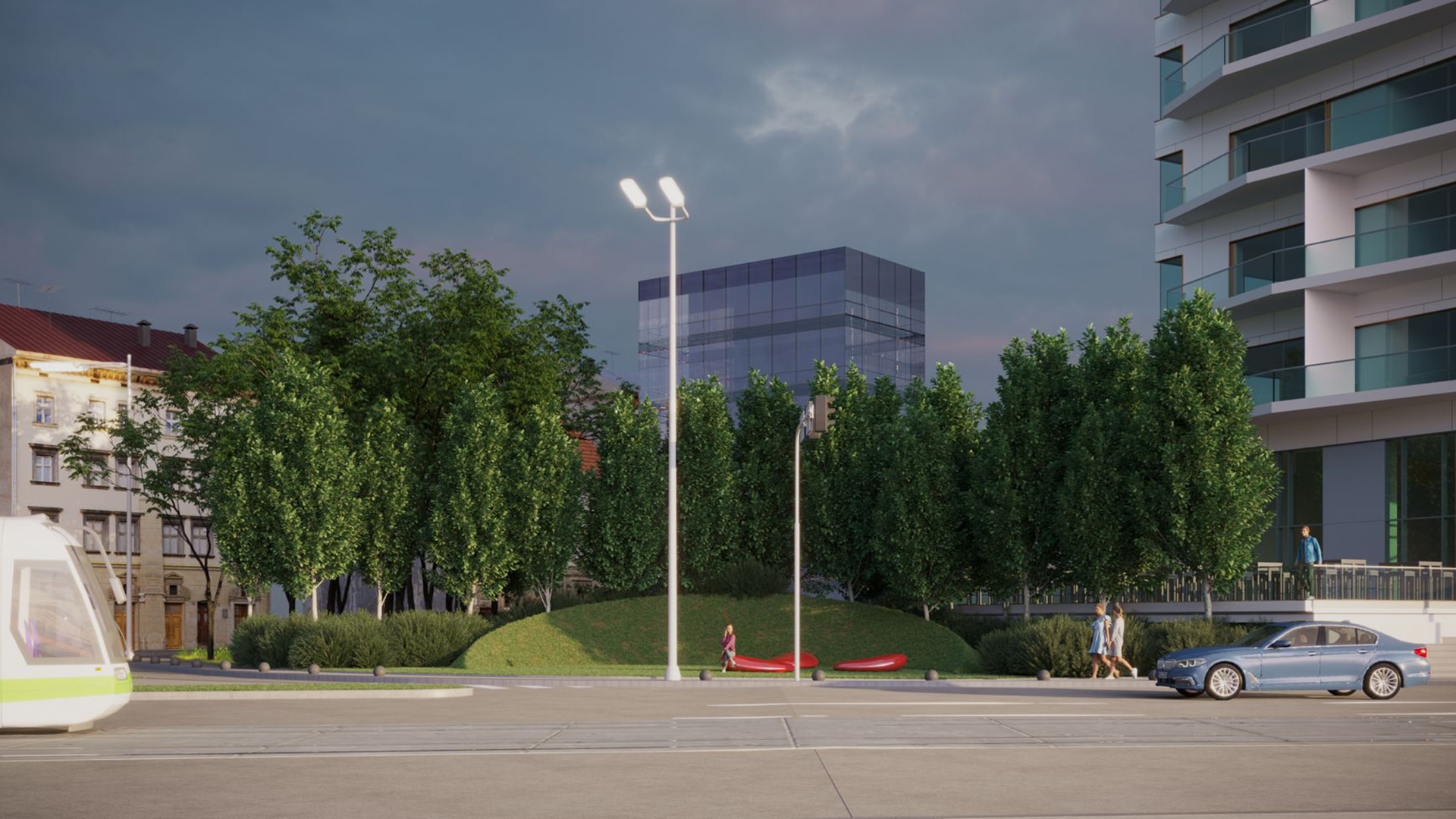
One of the most fascinating challenges in landscape architecture is the ability to remodel terrain. It is not just about leveling the soil, but about redrawing natural forms, creating a landscape that combines visual beauty with functionality. Contour lines become lines of force in the project, while ridges, depressions and slopes transform an ordinary garden into a living scenography.
Contour lines are the graphic language of relief. In landscape design, they represent the starting point of any coherent intervention. By tracing them, the designer decides where to create a small artificial hill, where to introduce a valley, where to hide the view and where to offer an open perspective. This play of lines not only organizes the terrain, but also defines water flows, pedestrian routes and the placement of vegetation.
When level differences become significant, retaining walls come into play. These are not just technical structures but also design elements. Built from raw stone, exposed concrete or gabions, walls can mark level transitions, shape planted terraces and generate textural plays that give character to the space. Complementing them, large boulders placed strategically introduce mineral accents that contrast with the softness of lawns and ornamental plants.
Another spectacular dimension of earth modeling is the integration of water. Waterfalls, artificial streams or small ponds all find their logic in relief. A steeper slope may host a cascade, a modeled valley can become a streambed, and a low area may be transformed into a retention basin. In this way, aesthetics merge with sustainability, as water is managed naturally without excessive technical infrastructure.
Earth modeling is not a formal caprice but a strategy that influences microclimate, circulation, views and the way space is used. Gardens designed in this way acquire a special dynamism: intimate areas hidden behind embankments, wide lawns for events, successive terraces that encourage plant diversity. Everything is conceived to create a complex, ever-changing experience where humans and nature coexist in balance.
In essence, earth modeling is the meeting of engineering and art. It requires technical knowledge but also creative sensitivity. Every mound of soil, every contour line or every wall built becomes part of a larger composition meant to inspire, relax and offer a new way of living outdoors. It is proof that the landscape is not just a natural given, but can be drawn, designed and lived as a cultural project.
At CMD/LA, we consider earth modeling an essential tool for any contemporary landscape project. It is the process through which we transform an inert plot into a living space, full of rhythms, contrasts and harmonies. An art of rewriting nature for people, while preserving its authenticity.
