
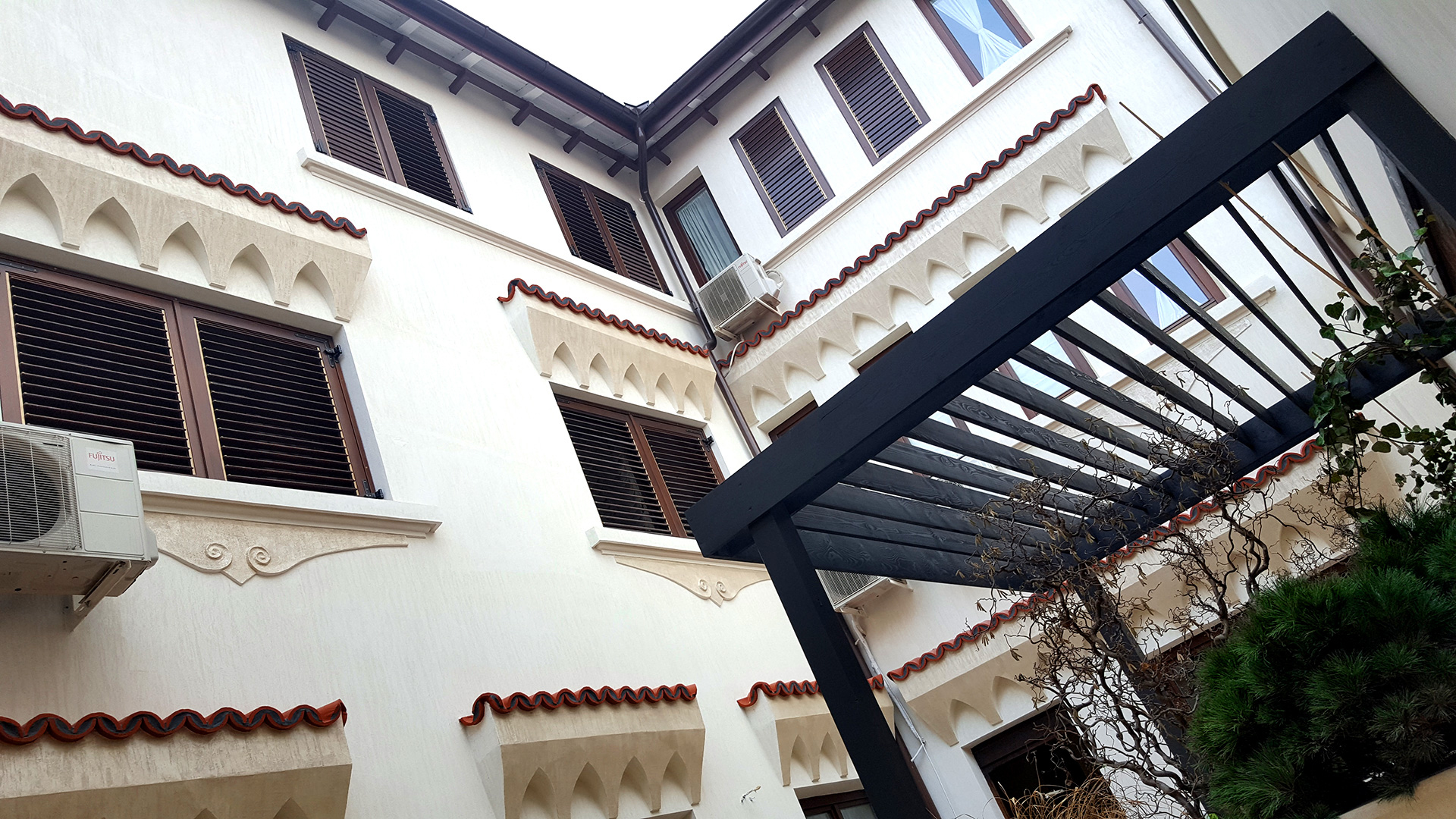
Pergolas have been part of gardens for centuries, bridging architecture and landscape in a way few other elements can. They create spaces of shade and intimacy, define transitions between areas, and invite climbing plants to transform structure into living architecture. Whether minimal or ornate, pergolas carry a poetic weight that goes beyond their function.
Wooden pergolas remain the most beloved type, often evoking Mediterranean patios or classic English gardens. Their natural texture blends seamlessly into planting schemes, offering a warm and tactile quality. Designers can choose between massive beams for a bold architectural presence or delicate latticework for a more romantic atmosphere. In contemporary gardens, untreated or lightly oiled wood keeps its authenticity, weathering into a silvery patina that enriches the design over time.
Metal has allowed pergolas to evolve into sleek and innovative architectural gestures. Steel or corten pergolas stand with structural clarity, resistant to time and weather. Their profiles can be ultra-thin, supporting large spans with minimal material, or deliberately expressive, celebrating craft and fabrication. In CMD/LA projects, metal pergolas often serve as the backbone of outdoor lounges, water basins, or plazas, anchoring design while remaining light in appearance.
The dialogue between structure and vegetation is at the heart of pergola design. Wisteria, roses, ivy, or grapevines soften the geometry and add a seasonal rhythm. Blossoms in spring, lush greenery in summer, and warm hues in autumn turn the pergola into a dynamic, ever-changing experience. For urban spaces, climbers also provide shade and microclimatic comfort, reducing heat and creating a natural canopy above pedestrians.
Depending on context, pergolas can be designed as strong architectural landmarks or as delicate frames for intimacy. In a public plaza, a metal pergola with water features may articulate movement and function as an urban landmark. In a private garden, a wooden pergola draped with climbing roses might become a retreat for contemplation and gatherings. The flexibility of the typology makes pergolas timeless instruments in landscape architecture.
Pergolas filter light in unique ways: beams and slats create patterns of shadow that animate surfaces throughout the day. At dusk, integrated lighting extends their role into the night, turning them into outdoor rooms. The play of light and shadow is as important as the material itself, making pergolas both functional and poetic.
Today, pergolas are being reimagined through sustainability and technology. Modular systems allow easy assembly and adaptation. Solar panels can be integrated into the structure, merging shade with energy production. Recycled steel or certified wood ensures a responsible material footprint. For CMD/LA, pergolas embody the meeting point between nature, comfort, and cultural memory — elements that root design in both history and innovation.
Pergolas remain more than structures: they are open-air rooms, poetic thresholds, and living canvases for nature. Their enduring relevance proves that in landscape architecture, the simplest forms often carry the deepest resonance.
