
Metal has long been associated with infrastructure and heavy construction, yet in landscape architecture it reveals an unexpected poetry. Through its textures, its reflections, and its ability to age gracefully, metal becomes a language of strength and elegance. From decorative black steel water basins to light corten pavilions, the material defines new scenarios in contemporary outdoor design.
Few materials interact with water as dramatically as metal. Decorative basins crafted from black steel or corten introduce a sculptural density that contrasts with the fluidity of water. Reflections across metallic surfaces produce subtle theatricality, where light, water, and material reinforce one another. In CMD/LA projects, these basins often act as visual anchors, focal points of contemplation, and urban landmarks.
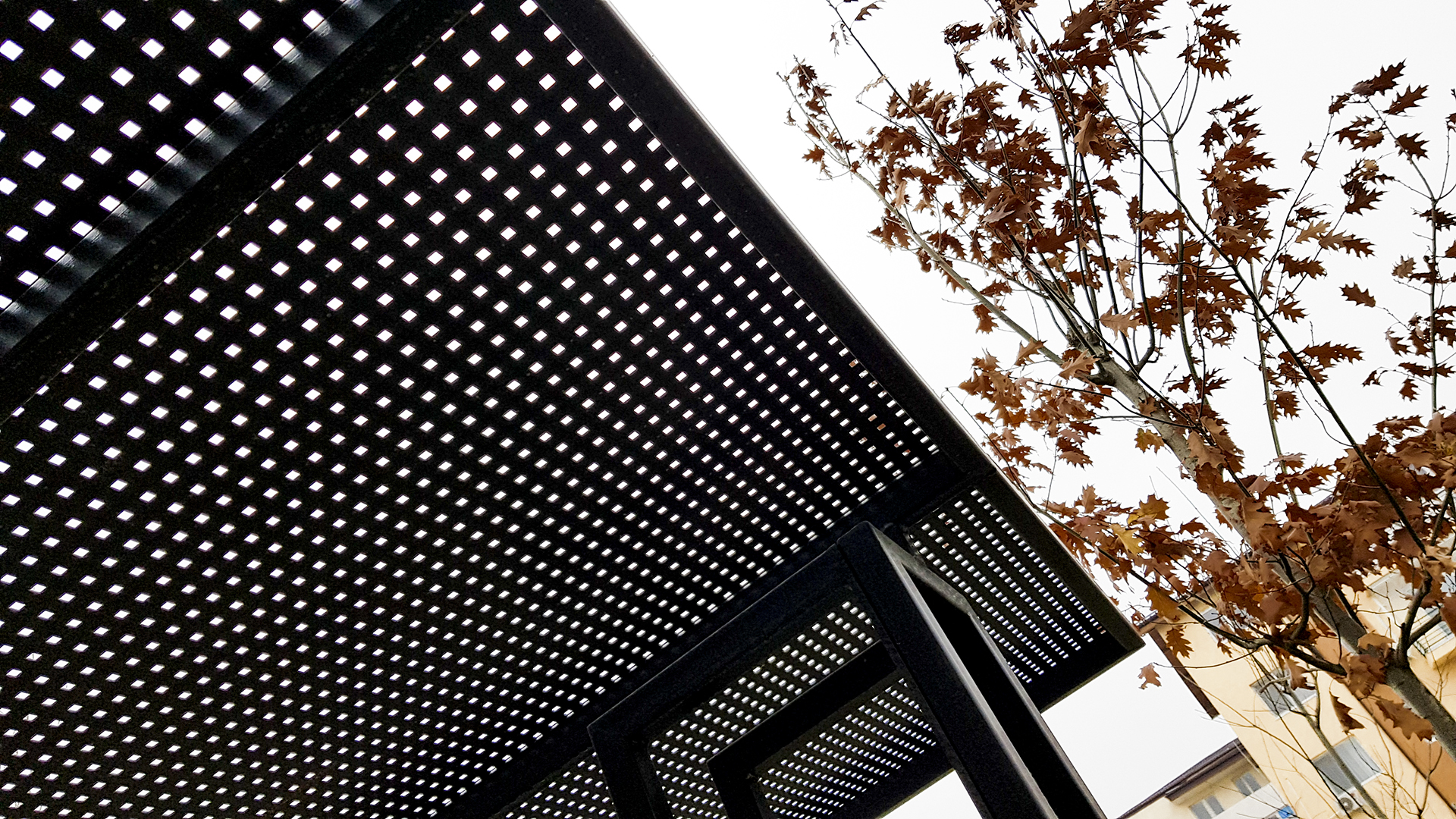
Metal pavilions are more than shaded shelters: they function as architectural gestures that filter light and define places of gathering. Steel and aluminum allow for a variety of expressions — from minimalist grids to intricate perforated surfaces that filter sunlight like contemporary lace. Combined with vegetation, such pavilions achieve balance between structural force and the delicacy of nature.
Often overlooked yet crucial, metal is used for plinths, socles, and copings. Embossed steel protects structures while adding visual identity. Its rhythmic textures and the way it captures light bring a contemporary character, while maintaining a discreet sobriety. In landscape design, these details become the fine line that separates the ordinary from the sophisticated.
In exterior stair design, metal acts as a subtle accent. Stair risers clad in black steel or corten trace elegant, precise lines. These metallic insertions underline the geometry of the stair and create expressive contrasts with stone or concrete treads. Such combinations emphasize both structure and movement, making each ascent or descent a tactile and visual experience.
The choice of metal dramatically influences the character of a project. Black steel conveys sobriety and modern clarity; embossed steel introduces tactile, dynamic textures; corten adds the dimension of time, allowing controlled patina to become part of the architectural expression. Each has its own voice, and when combined, they enrich outdoor environments with visual depth and material richness.
Beyond its structural role, metal carries meaning. It recalls the industrial and the monumental; it feels cold to the touch, yet warm in reflection. In gardens and public spaces, it urges us to rethink the relationship between nature and technology. At CMD/LA, we approach it not merely as a building component, but as a poetic presence that adds strength, clarity, and identity to the landscape.
Metal is not just a technical tool. It is a sculptural presence, a texture that breathes, and a material that evolves with time and climate. In the hands of landscape architects, it becomes a mediator between people, spaces, and nature — a symbol of resilience, modernity, and timeless elegance.
