
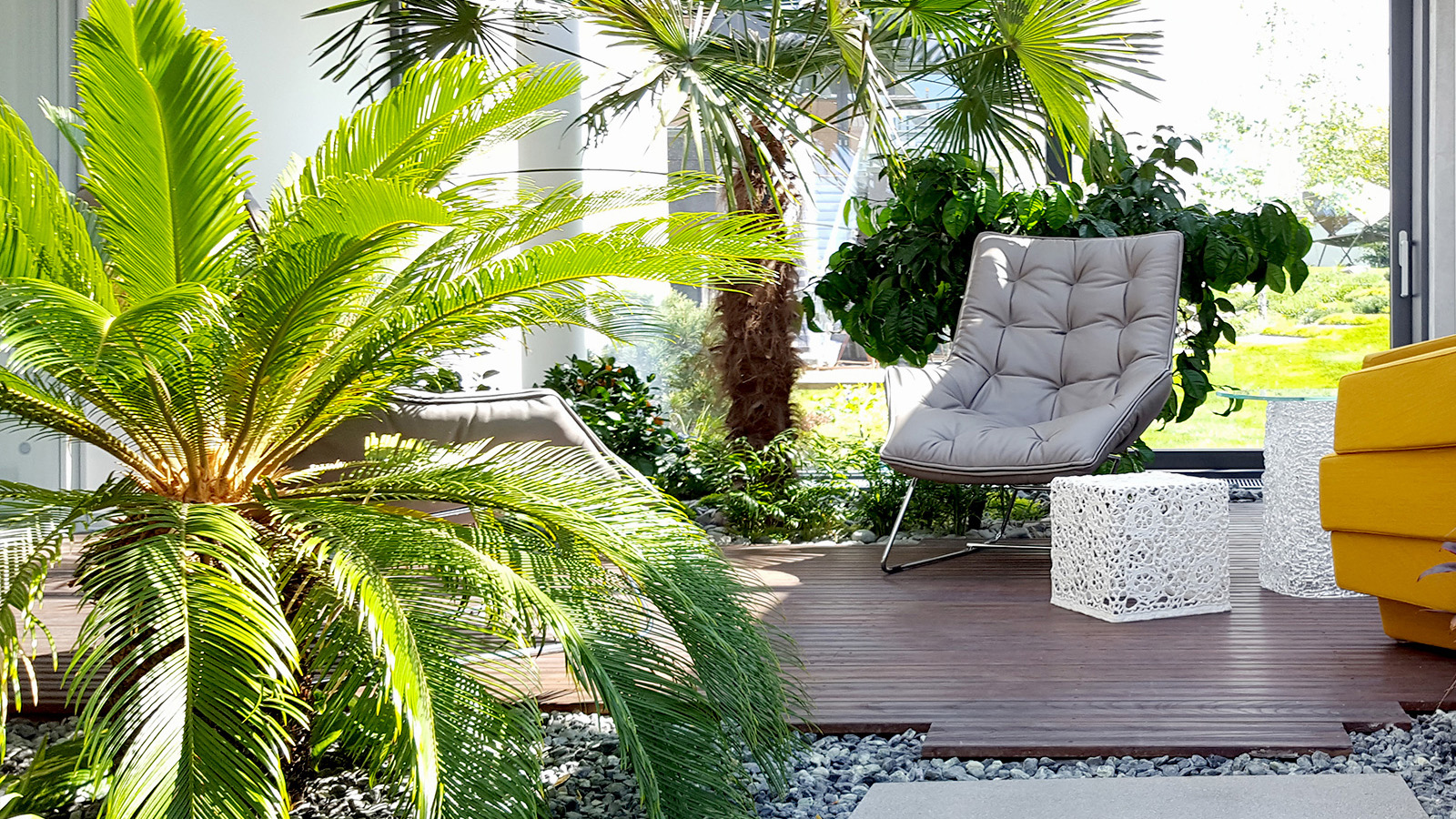
Greenhouses have always represented more than just functional structures. They are architectural oases where nature thrives under controlled conditions, enabling the cultivation of species that could not otherwise survive in our climate. In landscape architecture, greenhouses become focal points that combine design, science, and ecological responsibility.
Stepping into a greenhouse filled with exotic plants is an immersive experience. Palms, orchids, bromeliads, or ferns unfold in lush compositions, creating micro-worlds that stimulate the senses. Beyond aesthetics, these spaces preserve biodiversity, offering refuge for rare or endangered species. For designers, they are opportunities to connect visitors with the richness of global ecosystems in a single location.
One of the greatest advantages of greenhouses is their ability to extend the seasons. While outdoor vegetation rests during winter, greenhouse plants continue to flourish, maintaining a permanent atmosphere of vitality. This quality makes them valuable in both public parks and private gardens, where they provide color and life throughout the year.
Contemporary greenhouses are no longer limited to utilitarian forms. Architects and landscape designers experiment with geometry, materials, and technology to create transparent, sculptural structures. Steel and glass allow for bold, lightweight designs that maximize natural light. Shading systems, ventilation, and integrated irrigation turn these spaces into models of technical innovation aligned with ecological principles.
In urban contexts, greenhouses serve more than botanical purposes. They become educational hubs, where visitors learn about sustainability, climate change, and plant diversity. They also function as cultural venues, hosting exhibitions, workshops, or artistic events. By integrating greenhouses into the city fabric, landscape architects transform them into places of knowledge, recreation, and community gathering.
More than just containers for exotic plants, greenhouses embody the symbiosis between nature and architecture. They demonstrate how design can support life, create sustainable microclimates, and inspire curiosity. Whether in public gardens, university campuses, or private residences, they remind us that architecture can nurture—not just shelter—the natural world.
Through their transparency and vitality, greenhouses bridge the gap between human-built environments and the natural rhythms of vegetation. In landscape design, they stand as living architecture: a celebration of biodiversity, beauty, and the creative alliance between design and nature.
