
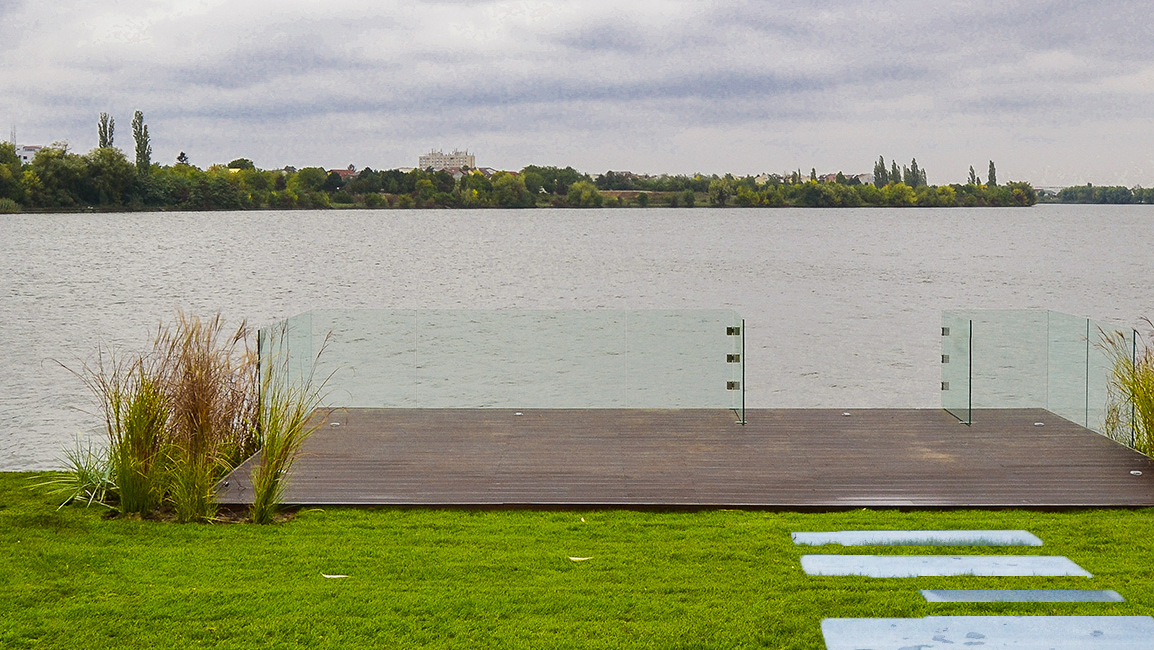
Glass has long been associated with transparency, openness, and light. In landscape architecture, it provides a unique contrast to natural textures such as stone or wood, while simultaneously amplifying the qualities of air, water, and vegetation. More than a structural element, glass in outdoor design is a mediator of views, reflections, and subtle spatial boundaries.
From railings and partitions to entire façades, glass offers designers the possibility to create boundaries without closing off space. In gardens, it allows pathways and terraces to remain open and visually connected, while still ensuring safety and structure. Its ability to dissolve barriers makes it especially valuable in contemporary landscape projects where continuity between interior and exterior is key.
When used in water features, glass enriches the atmosphere of a space through reflections and light play. Glass surfaces can capture the movement of water, magnify greenery, and double the perception of sky and horizon. This poetic interplay adds a subtle, almost immaterial quality to plazas, gardens, or residential courtyards.
Technological advances have transformed glass from a fragile element into a robust and versatile material. Tempered or laminated glass provides durability and safety, making it suitable for steps, bridges, or elevated walkways. This resilience ensures that glass not only enhances the aesthetic qualities of outdoor design but also withstands the demands of everyday use in public spaces.
Glass represents clarity and modernity, a statement of openness and innovation. In urban projects, it underlines the fluidity of circulation and the integration of natural elements into the built environment. In private gardens, it adds refinement, catching light throughout the day and creating a continuous dialogue with nature.
More than any other material, glass transforms landscapes into experiences of transparency, reflection, and light. In the hands of skilled designers, it is not only a surface but also a medium through which people connect with their surroundings in new and inspiring ways.
